In hazardous situations, evacuation teams are deployed for a safe evacuation, coordinated by medical specialists, anywhere in the world.


What medical evacuation is, and what it is not
Medical evacuation means getting you out of a hazardous situation and to the nearest place where you are safe and can be treated: after an accident in a remote region, during a natural disaster, or where the local system cannot provide the care you need. Teams are deployed for exactly this, coordinated by the emergency doctors and the medical coordinators of the 24/7 medical hotline.
It is not a scheduled service, and it is not a private ambulance for a routine appointment. It is also not a medical repatriation: the rescue brings you to safety and to the first adequate care, the repatriation brings you home once you are stable. Veltracon Medical coordinates; the rescue and transport teams and the receiving hospital act independently. We are not a healthcare provider.

We find ourselves living in uncertain times marked by pandemics, new diseases, climate change, natural disasters, and geopolitical conflicts as well as civil unrest.
That's why we've observed a growing demand for a solution that offers not only the highest standard of medical care but also global accessibility, particularly during emergencies. Our mission is clear: to safeguard you and your family from all potential risks.
To fulfil this mission, we've curated an exclusive premium service designed to address any medical scenario with unparalleled expertise and efficiency. Whether it's a health crisis or the need for rapid evacuation or rescue, our comprehensive solution ensures that you and your loved ones are protected, no matter where in the world you may be.
Rest assured, with our specialized service, you can navigate through uncertain times with confidence, knowing that your well-being is our top priority. Trust us to provide you with peace of mind and security in the face of adversity.
We provide you with unparalleled medical assistance and coordination for emergencies across the globe with local expertise and no language barrier.
Key components:
- Evacuation Teams
- Deployment of teams for safe evacuation from hazardous situations
- Medical Coordinators
- Our multi-lingual operators coordinate resources & responses swiftly and give instructions on how to perform crucial first aid, while arranging an ambulance
- Emergency Doctors
- At your disposal to give real-time diagnoses and medical advice
How a case runs
 AlertYou or someone with you calls the medical hotline. The coordinator takes your position and your condition, gives first-aid instructions and, if the situation allows, arranges a local ambulance.
 AssessmentOur emergency doctors give a real-time diagnosis and medical advice by phone and assess with the coordinators whether a deployment is necessary, and to where.
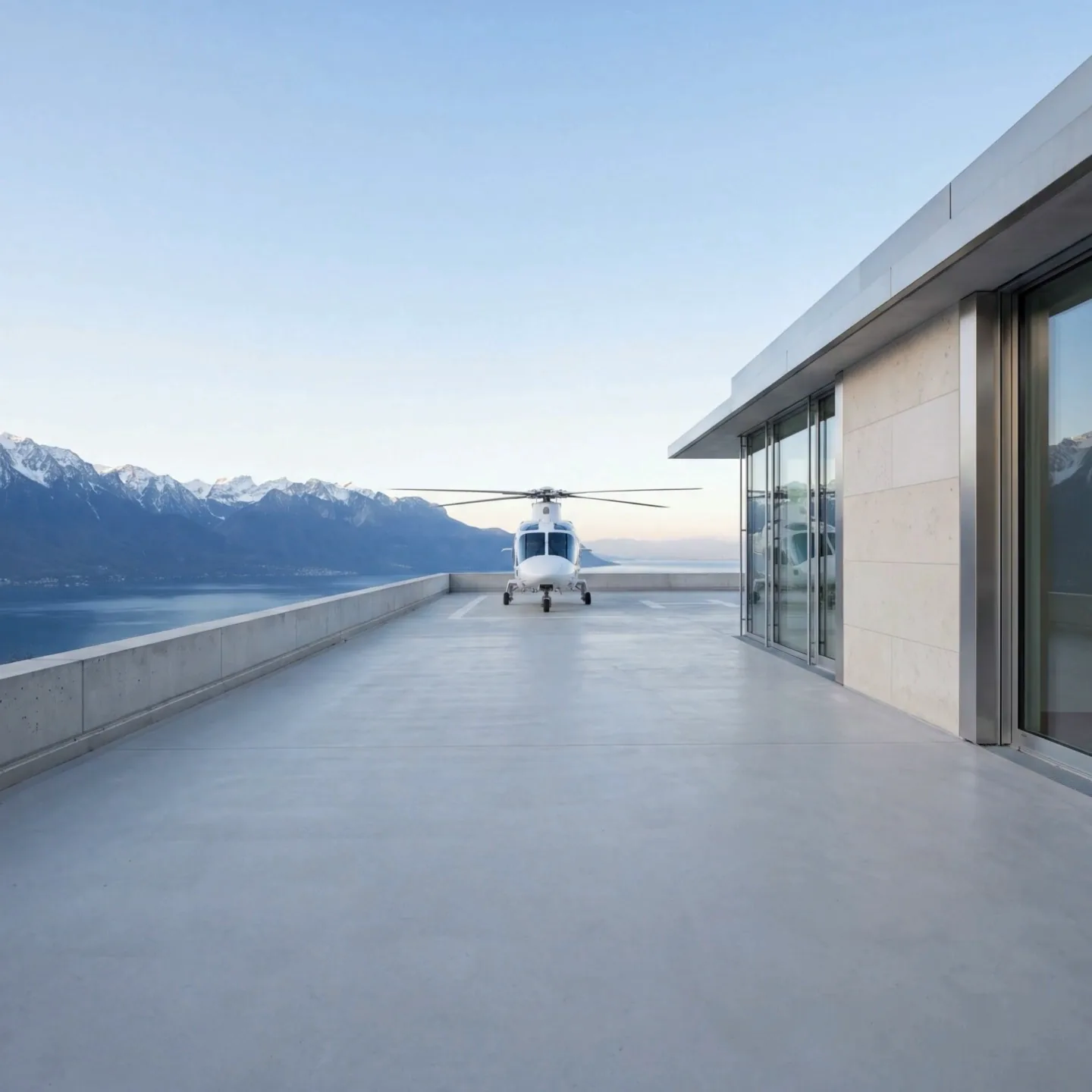 DeploymentTeams are deployed for the safe evacuation from the hazardous situation, by land, air or sea. Where an intensive-care flight is needed, our sister brand Shadow ICU arranges air ambulance flights.
 Receiving hospitalThe coordinators identify and brief the nearest hospital that can treat you and hand over what is known about your condition.
 Next stepOnce you are stable, the hotline organises the medically supervised return home, or the transfer to a clinic in Switzerland through our concierge medicine network; for routine care afterwards, the private doctor service.

Who it is for
For members who travel to places where a good hospital is hours away: expeditions, remote estates and islands, yachts and private aircraft, business trips into regions where the situation can change quickly. For families who want to know that a single call is enough, wherever a child or a parent happens to be.
Coordinated by the hotline, in your language
Deployments are coordinated by the 24/7 medical hotline of Veltracon Medical, headquartered in Zug. The coordinators are multilingual: they speak with you in your language and with the rescue teams and hospitals on site with local expertise.
Before an unusual trip, speak with your Veltracon Medical team in advance: exotic trips and expeditions are exactly the cases where a plan made beforehand decides how quickly help arrives. On request, the team prepares tailored travel safety reports.
 Zug
 Düsseldorf
 Dubai

How the work is paid for
The deployment of evacuation teams is a component of the 24/7 medical hotline, which is part of the Emergency membership and therefore of all three memberships. Veltracon Medical is an annual membership with an onboarding fee.
The membership pays for the coordination: the hotline, the emergency doctors on the line, the deployment of the teams and the briefing of the receiving hospital. As the Membership Overview states, the actual services following a virtual assessment or service proposal are not included in the membership; the rescue transport and the hospital treatment are charged by the provider.
Evacuate or treat on site: who decides
Not every emergency abroad ends in a flight. The UK Foreign Office describes a medical evacuation as a move made because specialist care is not available locally, and the CDC as transport from a resource-poor area to a hospital that delivers definitive care. Where the hospital on site can treat you adequately, Generali’s US travel plans do not pay for an evacuation, and AXA states that evacuation is based on medical necessity, not personal preference.
One of our own examples is a holiday on the Côte d’Azur and severe food poisoning: the team gets the member to the best hospital nearby. The destination of an evacuation is the nearest hospital that can provide the care, and as Allianz Care puts it, that hospital may or may not be in your home country. Saudi Arabia’s Insurance Authority uses the same rule in its model compulsory health policy for domestic workers: transfer to the nearest medical centre, inside or outside the Kingdom, that offers the service.
Typically, according to the CDC, an evacuation requires that the patient is in hospital and that several more days of hospital care are expected, or that the treatment needed is not available locally in comparable quality. Our emergency doctors give the medical assessment in real time, by phone; whether an insurer pays for the move remains the insurer’s decision.

What an evacuation costs, and who pays for it
The CDC Yellow Book 2026 puts a medical evacuation at USD 25,000 for transport within North America and at over USD 250,000 from distant or remote locations, with higher costs for critically ill patients. For the US market, the insurer Generali gives examples of about USD 25,000 from Mexico, USD 50,000 to USD 75,000 from Europe and USD 100,000 to USD 150,000 or more from Asia or remote regions.
Medicare does not cover medical evacuation, the European Health Insurance Card does not cover rescue and repatriation, and Swiss basic insurance contributes to rescue costs only for rescues inside Switzerland.
That leaves private insurance, on its own terms. Allianz Partners in the US, for example, pays for emergency transport only if it has judged it medically necessary and made the arrangements in advance; otherwise it pays no more than it would have paid itself. Our guides explain the difference between evacuation and repatriation and when travel insurance won’t fly you home.

Remote homes, yachts and aircraft
The Holistic membership includes travel risk management that prepares members and their families for upcoming trips, particularly adventure travel, and expert assessments for setting up medical infrastructure in villas, chalets and on private islands. With the right infrastructure in place, dispatched doctors can intervene more effectively.
For yachts and aircraft, the Longevity membership adds advice on the medical equipment to carry and offers training for crews on how to handle a medical emergency with our hotline and how to prepare for a rescue operation. Our team stands by to guide crews through a medical emergency in real time. Coordination runs from our headquarters in Zug, with branch offices in Düsseldorf and Dubai, and the hotline is accessible from anywhere in the world.

Questions we are asked
Straight answers on cover, cost and how the membership works.

Does Veltracon Medical cover medical evacuation and repatriation?
Yes. Evacuation teams are deployed for safe evacuation from hazardous situations, and medical repatriation covers the return to your home or a country of your choice for medical care when necessary. Both are part of the 24/7 medical hotline, which is included in every membership tier.
When is a medical evacuation necessary?
When you are in a hazardous situation or in a place where the care you need is not available: after an accident in a remote region, during a natural disaster or a security incident, or when a local hospital cannot treat your condition. Our emergency doctors make that assessment in real time, by phone.
How do I trigger a medical evacuation?
By calling the 24/7 medical hotline. A medical coordinator takes your position and condition and gives first-aid instructions, while the emergency doctors assess whether a team must be deployed.
Who carries out an evacuation coordinated by Veltracon Medical?
Teams and transport partners from our network. Where an intensive-care flight is needed, our sister brand Shadow ICU arranges it. The medical professionals involved operate independently; Veltracon Medical is not a healthcare provider.
Where does a medical evacuation take me?
A medical evacuation takes you to the nearest hospital that can treat your condition safely. Once you are stable, the hotline can organise the supervised return home or the transfer to a clinic in Switzerland.
Is evacuation included in every Veltracon Medical membership?
Yes. It is one of the four components of the 24/7 medical hotline, which is part of the Emergency membership and of Holistic and Longevity as well.
Does the membership pay for the rescue flight?
No. The membership covers the coordination. The transport and the hospital treatment follow a service proposal and are charged by the provider. Membership does not substitute for comprehensive health insurance.
Can I prepare before a trip to a remote area?
Yes, and we recommend it. Coordinate exotic trips and expeditions with your Veltracon Medical team in advance, so that the best emergency solutions are in place if needed.
How much does a medical evacuation flight cost?
It depends on the distance and on your condition. The US State Department puts an air-ambulance evacuation back to the United States at USD 20,000 to USD 200,000; the CDC gives USD 25,000 within North America and over USD 250,000 from distant or remote locations.
Is USD 100,000 enough for a medical evacuation?
For a transfer within one region it can be; from a remote place, not necessarily, since the CDC puts evacuations from distant or remote locations at over USD 250,000. Compare the limit in your policy with where you travel: AXA’s US plans, for example, set limits from USD 100,000 to USD 1,000,000 for emergency evacuation and repatriation of remains.
Does insurance cover medical evacuation?
Medicare does not, and the European Health Insurance Card does not cover rescue and repatriation, so it comes down to private cover. Travel insurance can pay if the policy includes evacuation, up to its limit and subject to the insurer’s medical decision and the policy’s exclusions. A trip-cancellation policy may not be enough: the CDC warns that such cover might not include medical expenses abroad or medical evacuation.
What are the three types of evacuation?
In AXA’s US travel insurance terms, for example: a medical evacuation to the nearest adequate medical facility, a medical repatriation home for continued treatment, and a non-medical evacuation. AXA describes the third as driven by safety assessments rather than clinical judgement, for example during political unrest or a natural disaster.
Will my government evacuate me in a crisis?
Several governments say not to count on it. The UK government tells its nationals not to expect an evacuation, US citizens must reimburse the government for government-coordinated transport, and the Swiss foreign ministry states that, as a rule, it does not organise departures: leaving is voluntary and at one’s own cost.
Can Veltracon Medical coordinate an evacuation in the Gulf or in Asia?
Yes. The 24/7 medical hotline coordinates emergencies worldwide and is accessible from anywhere in the world; besides the headquarters in Zug, Veltracon Medical has branch offices in Düsseldorf and Dubai. The rescue teams, transport providers and hospitals involved act independently.
Related services
All services
Medical repatriation
When treatment is better continued at home, the 24/7 medical hotline organises the medically supervised return: to your home or to a country of your choice.

Concierge medicine
Private medical care, coordinated from Switzerland: a curated network of specialists, with appointments and treatment arranged around you, in your language and your time zone.

A medical second opinion
Certainty before a decision: specialists affiliated with leading institutions such as Harvard and Yale confirm or revise a diagnosis and set the course for the best available treatment.




Enquire About Membership
Embark on a journey where every detail of your well-being is our priority, offering you the ultimate peace of mind for your family and yourself.